Youth Hockey Skating Stride: Fix It With a Simple Plan
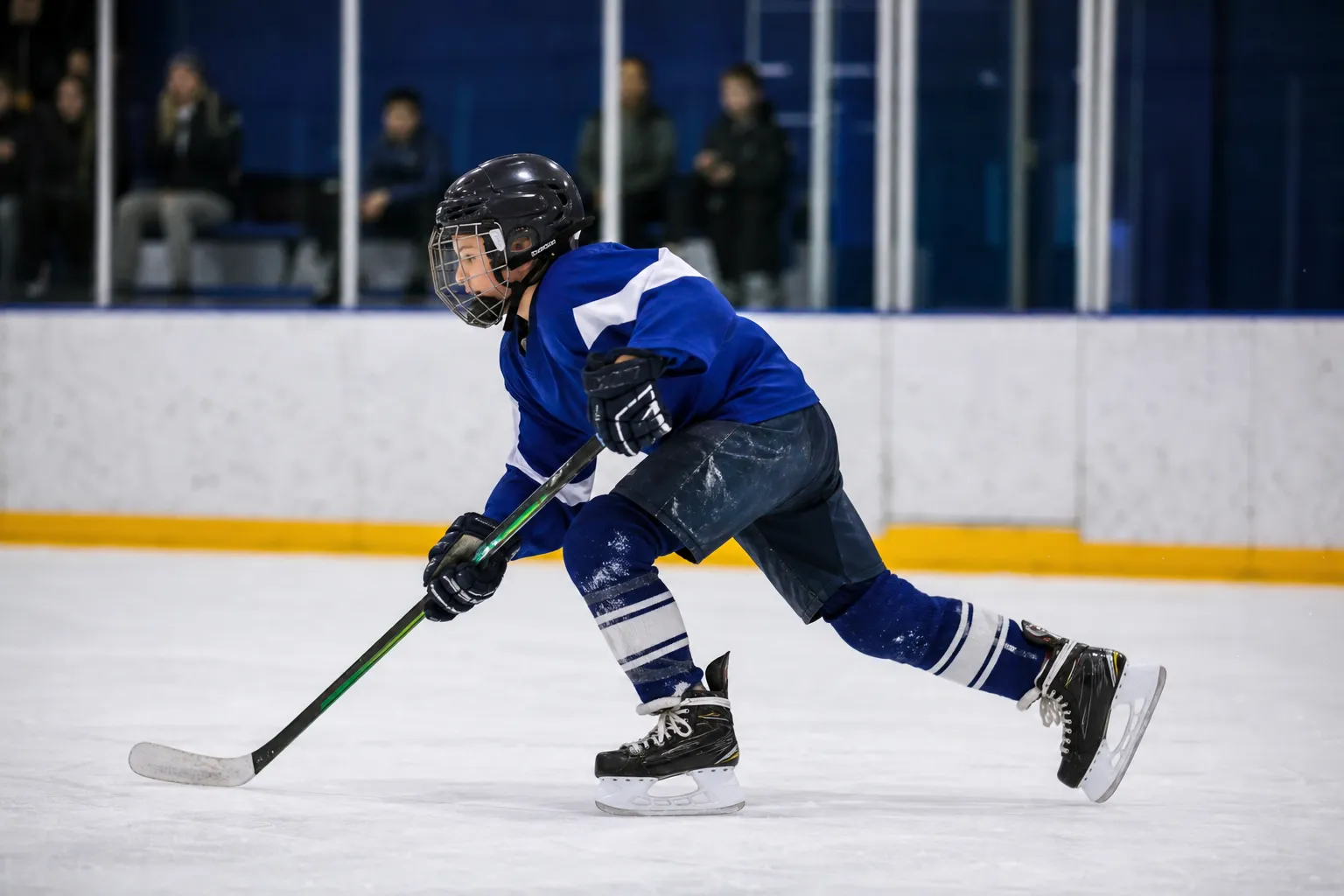
A youth hockey skating stride is the repeating push, recovery and glide a young player uses to move forward on the ice. Most parents watch the puck. Coaches watch the knees and the push. A small change in stride can make a skater faster, steadier and less tired by the third period.
Quick Answer
A strong stride has a deep knee bend, a full push to the side and back, and a quick recovery of the pushing leg. Film from the side at hip height, slow the clip down, and work on one fix at a time with your coach.
What Does a Good Skating Stride Look Like?
A good stride is low, balanced and repeatable. The skater bends the knees, keeps the chest up and pushes the blade out to the side, not straight back. Then the leg extends fully and the foot snaps back under the body.
A 12-year-old doesn't need a perfect textbook stride, but the basics should be visible. USA Hockey treats skating as the foundation of the game and shares age-appropriate development guidance for coaches and parents.
The Three Parts of the Forward Stride
1. Knee bend and posture
Knee bend is the angle at the knee while the skater glides. A deeper bend lets the skater push with the big leg muscles. Standing tall is the most common reason young players look slow.
2. Push and full extension
Extension means the pushing leg straightens out to the side and back. Short, choppy pushes waste energy. A full push moves the skater farther with each stride.
3. Recovery and glide
Recovery is the leg coming back under the body. It should be quick and close to the ice. After that, the skater glides on a bent knee before the next push.
Five Common Stride Flaws in Young Players
Most young skaters show one or two of these. That's normal, and development takes time.
| What you see | What it often means |
|---|---|
| Upright chest, straight knees | Not enough knee bend |
| Short, quick steps | Incomplete leg extension |
| Toes pointing out on the push | Pushing back, not to the side |
| Foot lifts high after the push | Slow, wasteful recovery |
| Head bobbing up and down | Unsteady balance |
If your child struggles with all five, read what to do if your kid isn't a natural skater. Skating is learnable, and progress is usually steady.
How to Check a Stride With Phone Video
Video lets everyone look at the same thing. Try this at the next practice or open skate.
- Set the phone at hip height. Use the boards or a tripod and film from the side so the whole body and both skates stay in frame.
- Record four or five passes. Ask the skater to stride at a steady pace for 30 to 40 feet each time.
- Slow the video down. Pause when the pushing leg finishes and check the knee bend and extension.
- Pick one fix. Ask the coach how to practice it on the ice.
- Re-record in a few weeks. Compare the new clips with the old ones.
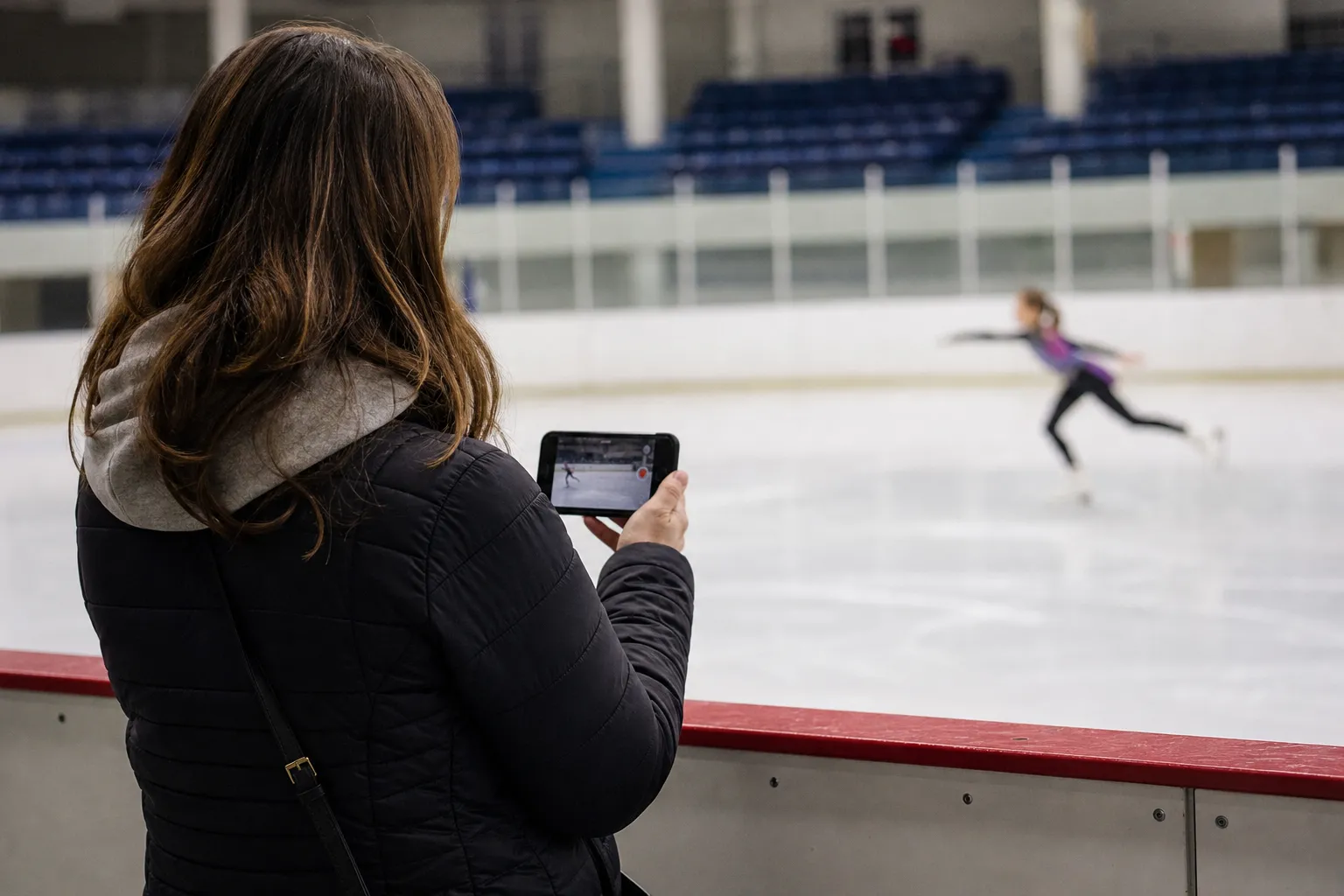
Hip-height video from the side gives the clearest view of a skater's stride.
Simple Drills to Improve the Stride
Your coach will know the best drills for your skater. These three are common and easy to describe.
- Low glide: Push twice, then glide on a deep knee bend for 3 seconds. Keep the chest up.
- One-leg push: Push with one leg and glide on the other. Finish each push with full extension.
- Quick recovery: After every push, snap the foot back under the body and keep the blade close to the ice.
Keep sessions short and fun, especially for younger skaters. A few focused minutes beat a long, tiring session.
Where GameRunIQ Fits In
GameRunIQ supports the coach, it doesn't replace them. Upload game or practice video and you get a player report with a scorecard that rates skating and other parts of the game from 1 to 10, plus areas for development and recommendations for improvement. You can see how it's laid out in this sample ice hockey report, or read more about GameRun for ice hockey. Starting is free at gamerun.ai, and if you share a report with others, check your sharing settings first.
Final Thoughts
A better youth hockey skating stride starts with three basics: a deeper knee bend, full extension and a quick recovery. Film from the side, slow the video down and pick one fix at a time. Then let the coach teach it and re-record to see progress. Skating grows with patience, and every skater develops at their own pace.
Frequently Asked Questions
What does a good forward stride look like?
The skater stays low with knees bent, chest up and head steady. The pushing leg extends fully to the side and back, then snaps back under the body.
Why do young skaters stand too tall?
Many young players feel safer upright, and tired legs make it worse. Coaches usually fix it with knee bend drills and short, low glides.
How do I film my child's skating stride?
Film from the side at hip height, keep the full body and both skates in frame, and record four or five passes. Good rink lighting and a steady phone make the clip easier to review.
How long does it take to improve a stride?
It varies by age, practice time and coaching. Most players need several weeks of focused work on one habit before it looks natural at game speed.
Can video analysis replace a skating coach?
No. A coach teaches the fix and video helps everyone look at the same movement. GameRunIQ is built to support that coaching.